

Choosing the right Lumix laser for your patients and your practice
All Lumix models offer the high-peak power superpulsed wavelengths. Some models combine Superpulsed with one, two, or more standard pulsed continuous wavelengths, producing a synchronized emission that further potentiates the continuous wave wavelengths. Issues of treatment space, mobility to move among multiple treatment areas, or practice style may predispose you to the smaller desktop models or the larger wheeled models. Multiple power and wavelength options are available in both designs.
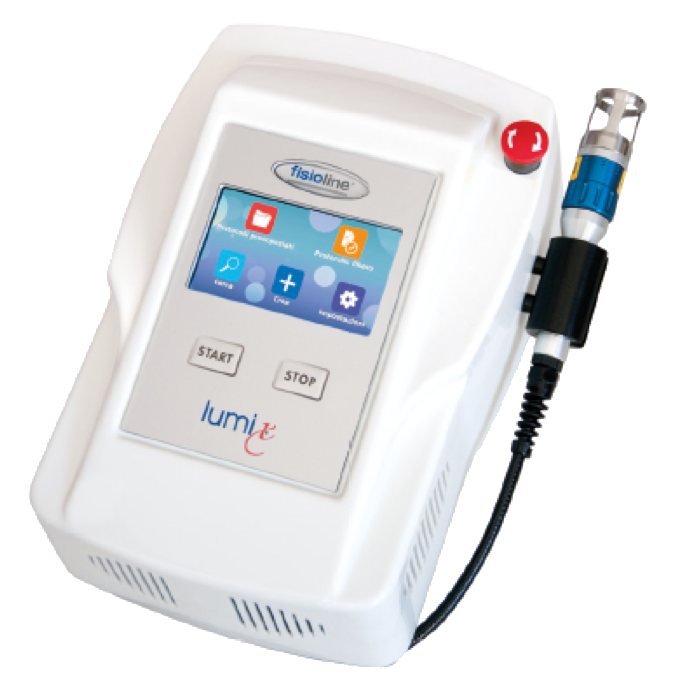
Small footprint with interchangeable lenses
If you prefer a small footprint with more than adequate average power for diverse treatments, the desktop/ countertop model may suit your needs. The Lumix 45W or 110W superpulsed peak power desktop models offer interchangeable treatment lens options, with different treatment spot sizes.
The addition of an accessory articulated arm provides unattended treatment options for this model.
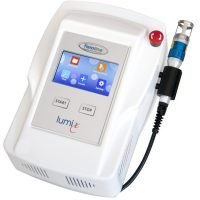
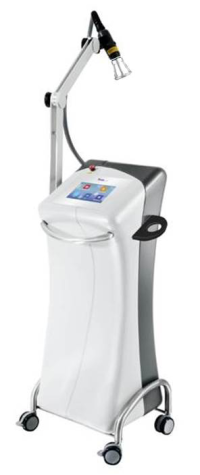
Mobility, unattended options, larger spot size
If you prefer higher pulse powers, the ease of moving the larger wheeled unit among different rooms, or the built-in unattended treatment options, the Lumix 250W or 660W superpulsed peak power models offer that flexibility.
These models also offer a larger lens aperture and treatment spot size, shortening the treatment time for large treatment areas. The articulated arm is standard for this model, and permits unattended treatment options and easier combination with other modalities.
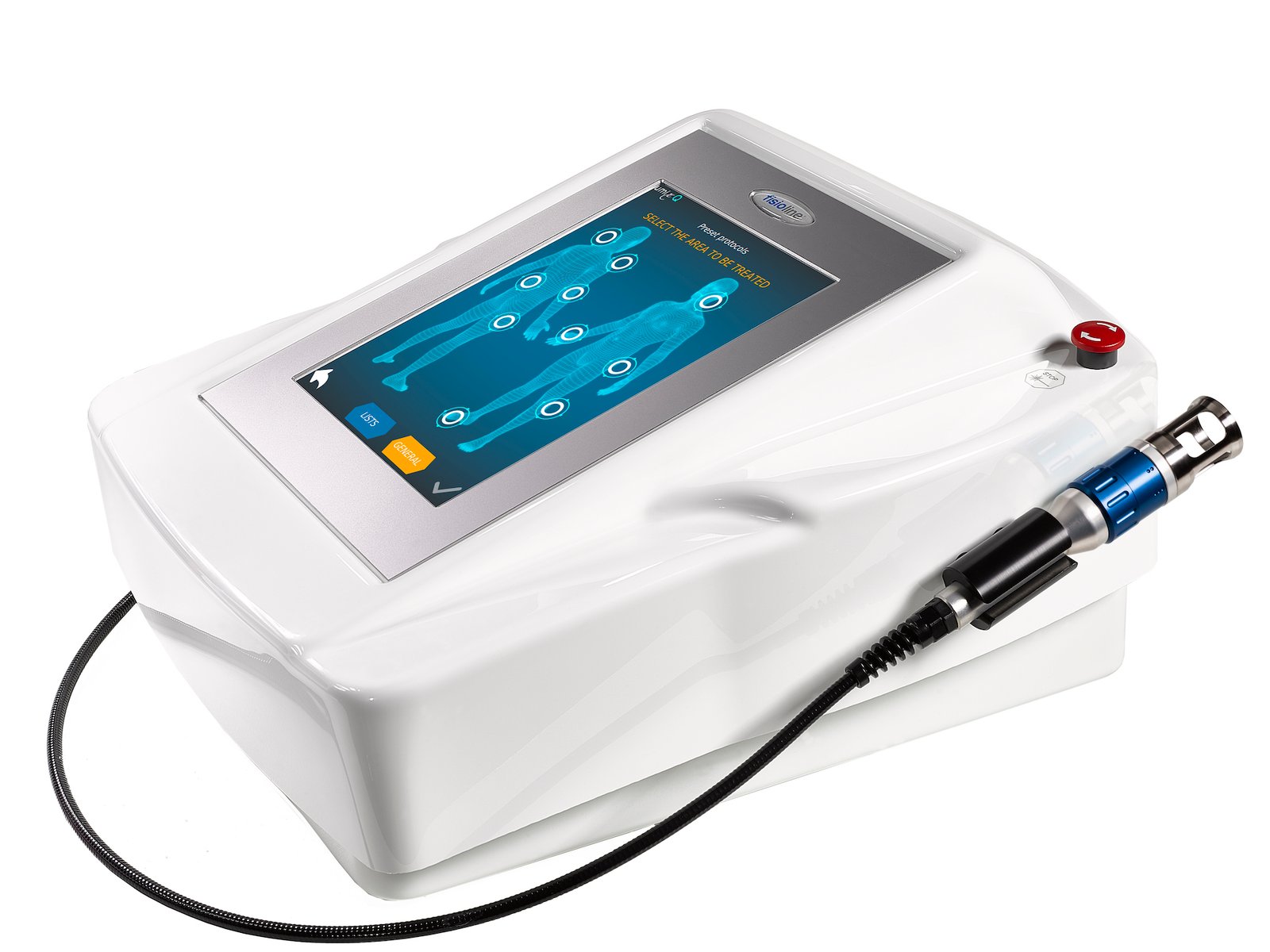
And the all new Nd:YAG Superpulsed 1064 nm LUMIX Q
Superpulsed solid state technology that delivers powerful, non-thermal healing deeply. With maximum pulse/peak power of 130,000 watts, average power up to 20 watts, and pulse regulation from 1-100 kHz, the Lumix Q is a compact powerhouse of superpulsed laser therapy.
Desktop style, interchangeable lenses. The addition of an accessory articulated arm provides unattended treatments options.
Consider what pulse and average powers produce the best results for the conditions you treat.
Some practices primarily treat relatively shallow anatomical structures, or small treatment areas such as in dentistry, podiatry, dermatology, and pediatrics. These treatments may benefit from depth of penetration, but typically require less energy density. Several of the desktop models provide sufficient depth of tissue penetration and power for these applications.
Patient size and body habitus also drive the power requirements of your laser. If your practice treats many large and/or muscular patients, you may reduce treatment times using the wheeled models that safely permit higher superpulsed power density and larger treatment areas, while maintaining depth of penetration. Desktop models can provide the same depth of penetration, while requiring more time to achieve the same energy density.
Considerations for penetration and treatment time
Lumix 45W – Superpulsed peak power of 45W is accomplished by one 45W diode
Lumix 250W – Superpulsed peak power of 250W is accomplished by synchronizing six 45W diodes through one larger aperture. Yields same penetration depth as one 45W diode, but speeds treatment time (for larger treatment areas) by producing greater power density for the larger spot size.
Lumix 110W – Superpulsed peak power of 110W is accomplished by one 110W diode
Lumix 660W – Superpulsed peak power of 660W is accomplished by synchronizing six 110W diodes through one larger aperture. Yields same penetration depth as one 110W diode, but speeds treatment time (for larger treatment areas) by producing greater power density for the larger spot size.
Therefore, the Lumix 110W and the 660W offer greater penetration than the 45W or 250W (per unit time).
The 250W and the 660W offer greater power density and treatment spot size (per unit time).
Similar penetrations can be accomplished by these models. The 45W and the 250W will take more time to reach the penetration and/or the power density of the 110W or the 660W, respectively.
The Lumix Q, a different superpulsed technology, similarly further reduces the treatment time to accomplish the power density of the other Lumix superpulsed lasers.
Which wavelengths best fit the patients and conditions you treat?
Perhaps the most important consideration for purchasing a therapeutic laser is the depth of tissue penetration desired for the practice’s applications and the treatment time interval. All Lumix superpulsed lasers offer deep tissue penetration, surpassing other therapeutic lasers in the US.
- Depth of tissue penetration is primarily determined by pulse duration, pulse power and wavelength.
- Treatment time is determined by average power, pulse power and treatment spot size.
Lumix superpulsed lasers offer choices of wavelengths, average and pulse powers, and treatment spot sizes. All Lumix models offer practitioners the flexibility to treat a variety of tissue types, with combinations of superpulsed and pulsed continuous wave wavelengths.
Skin, muscle, bone, nerve, and cartilage respond somewhat differently to different wavelengths. Any laser wavelength in the 600-1100 nm therapeutic range benefits most tissues. However, wavelengths tend to be differentially preferred (more effectively absorbed) by these tissue types:
- vascular tissues: muscle, mucosa, blood vessels
- less vascular tissues: ligaments, discs, tendons, bone, cartilage
- nerve tissue and bursa
While the superpulsed 910 nm wavelength is highly effective with all these tissue types, other wavelengths are more “specialized.” Choose Lumix models that offer the combinations of wavelengths to fit your practice’s primary treatment targets.
Lumix superpulsed lasers’ unique range of wavelengths and exponentially superpulsed emissions excel in pain relief and cellular regeneration. The result is fast pain relief and enhanced tissue repair in skin, nerve, muscle, cartilage, and bone. Physical medicine, dentistry, chiropractic, dermatology, podiatry, physical therapy, sports medicine, orthopedics, and pediatrics are all candidates for the powerful results found with Lumix superpulsed laser therapy.
Laser Biotech International and Lumix Lasers– Advanced Treatment Solutions for Physiotherapy Clinics
At Laser Biotech International, we focus on merging health sciences, innovation, and technology to enhance patient care. For more than two decades, we have provided top-quality laser systems to promote recovery, reduce pain, and support rehabilitation. If you need a high-powered laser for physical medicine clinics, our solutions offer the best balance of safety, efficiency, and precision.
Our innovative product line features the Lumix superpulsed diode-based lasers and the revolutionary Lumix Q solid-state laser. Both are highly acclaimed for their ability to deliver consistent and long-lasting results. Whether you’re in sports medicine, dentistry, chiropractic, or physical rehabilitation, these systems are designed to ensure your clinic’s success and to provide your patients with an exceptional treatment experience.
Main Benefits of Our Lasers
- Genuinely natural pain relief without invasive surgery
- Faster recovery from sports injuries and surgical rehabilitation
- Effects include reduced inflammation, strengthened tissues, boosted circulation
- Effective management of arthritis, neuropathies, and soft tissue injuries
- Successful rehabilitation outcomes increase patient satisfaction and enhance the clinic’s reputation.
The Lumix superpulsed diode-based lasers offer deep tissue penetration and are suitable for most conditions. The Lumix Q solid-state laser provides significantly increased pulsed power, resulting in greater precision and safety. Both models ultimately lead to improved outcomes for both acute and chronic treatments.
Frequently Asked Questions (FAQ)
A: Lumix lasers are highly specialized devices that direct powerful yet safe laser energy to tissues, speeding up repair and offering effective pain relief.
A: The Lumix laser stimulates cellular activity, promotes tissue regeneration, and resolves inflammation, which means patients recover more quickly.
A: The Lumix Q solid-state laser features the highest pulsed emission technology, offering precise energy delivery and enhanced safety for delicate procedures, as well as powerful penetration for larger injuries.
A: The Lumix high-pulse power lasers are designed and built for frequent, safe, and reliable clinical use.
Take Your Clinic to the Next Level
At Laser Biotech International, we enable clinics to offer advanced, non-surgical, and highly effective laser treatments. Add Lumix and Lumix Q lasers to your practice to expand your services, enhance patient recovery, and remain competitive in the physical medicine field.
Get in touch with us today to learn more about our advanced laser technology and how it can elevate your practice.